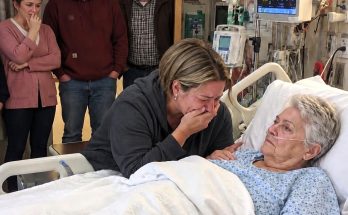
The first thing I noticed was not the bruising. It was the way Emily stopped breathing when her mother walked into the room.
It lasted only a second. Her spoon hovered above a bowl of thin oatmeal, her shoulders tightened, and her eyes flicked toward Victoria Mercer as though she were checking whether she was allowed to swallow. Then she lowered her gaze and took another small bite.
I sat across the dining table beside Daniel, my fiancé, trying to understand why the woman who was supposed to become my sister-in-law looked as though she had not slept in weeks.
The Mercer house stood on several acres outside Boston, an old stone property surrounded by bare maples and clipped hedges. From the driveway it looked expensive enough to belong in a magazine. Inside, everything was polished: silver frames, antique furniture, oil paintings, crystal glasses that seemed too delicate to touch.
Nothing looked broken.
That was what made the silence feel so strange.
Victoria had greeted me at the front door in a cream-colored dress and a string of pearls. She kissed the air beside my cheek and immediately began assessing me with the practiced smile of someone accustomed to deciding whether people belonged in her world.
“You’re even prettier than Daniel said,” she told me.
“Thank you.”
She tilted her head.
“His last serious girlfriend was lovely too. She simply wasn't very adaptable.”
Daniel laughed.
I gave him a look.
He squeezed my hand. “Mom means you’ll fit right in.”
Victoria smiled as though he had translated something perfectly acceptable from a language I did not yet understand.
His father, Richard, barely acknowledged me. He sat in the library with a glass of whiskey and a newspaper spread across his lap. When Daniel introduced us, Richard lifted his eyes for perhaps two seconds before returning to the financial section.
“Good,” he said.
That was apparently my formal welcome.
I told myself not to read too much into it. Daniel had warned me that his father was reserved, that his mother could be intense, and that Emily had been struggling with health problems for several months.
“She’s had a rough year,” he had said during the drive.
“What kind of health problems?”
“Stomach issues. Nothing life-threatening.”
He had changed the subject so smoothly that I barely noticed at the time.
At dinner, the difference between Emily and everyone else became impossible to ignore.
Richard had roast beef. Victoria had potatoes and glazed carrots. Daniel's plate was piled high enough that he joked about needing a second stomach.
Emily received oatmeal.
Not the thick, warm kind people usually make when they are sick. Hers was watery, almost gray, with a few swollen grains floating in the middle.
She stared at it.
Then she looked at her mother.
Victoria did not look back.
“Eat,” she said.
Emily picked up her spoon.
I watched her take three tiny mouthfuls.
“Does she need something else?” I asked.
Daniel's hand touched my knee beneath the table.
It was not affectionate.
It was a warning.
Victoria looked at me with polite surprise. “Why?”
“I just noticed she isn't eating much.”
“She has digestive issues,” Daniel said quickly.
Emily kept her eyes on the bowl.
I glanced at her sleeves. She wore a long cardigan despite the warmth of the dining room. When she reached for her water, the fabric slipped backward.
Purple marks circled her wrist.
Not one bruise.
Several.
They looked like fingerprints.
Emily noticed me looking and immediately pulled her sleeve down.
“Are those from your stomach problems too?” I asked.
The room became silent.
Daniel's fingers tightened against my knee.
“Claire,” he said softly.
Emily's spoon stopped moving.
Richard placed his fork on the plate.
Victoria's expression hardened.
“Emily has always been accident-prone,” she said.
I looked at Emily.
She did not nod.
She did not disagree.
She simply kept staring at the oatmeal.
The conversation resumed several seconds later, but something fundamental had shifted. Daniel began talking about a business trip. Victoria asked me about my job. Richard complained about interest rates.
No one mentioned the bruises again.
But I could not stop thinking about them.
After dinner, I wandered toward the laundry room under the excuse of looking for the bathroom. I found Emily standing alone near a narrow window, holding a basket of folded towels.
Up close, she looked even younger than twenty-six.
“You don't have to explain anything to me,” I whispered.
Her hands tightened around the basket.
“I wasn't going to.”
“I know.”
She looked toward the hallway.
“Then why did you come here?”
“Because you looked frightened.”
A tiny movement crossed her face.
Not anger.
Recognition.
Before she could answer, footsteps sounded on the floor behind us.
Emily went completely still.
Daniel appeared in the doorway.
“Everything okay?”
His voice was gentle.
That was what unsettled me most.
Emily's face had already lost what little color it had.
“Perfect,” I said.
Daniel smiled.
“Good.”
He looked at Emily.
“Mom wants those towels upstairs.”
Emily nodded.
He waited.
She hurried away.
I watched her disappear around the corner.
Daniel slipped an arm around my waist.
“You're going to have to be careful with Emily.”
“Why?”
“She reads too much into things.”
“I asked about her bruises.”
He sighed.
“She's dramatic.”
“That looked like a bruise from someone's hand.”
His expression changed for barely a moment.
Then it was gone.
“You don't know my family yet.”
“I'm trying to.”
“Then trust me.”
That sentence stayed with me.
Not because it reassured me.
Because he had said it as though trust meant accepting his version of events without asking questions.
Later, as we prepared to leave, Victoria followed us toward the front door.
She adjusted the collar of my coat without asking.
“You're lovely, Claire,” she said. “But this family values harmony.”
“I do too.”
“Good.”
Her smile sharpened.
“Then you'll learn when not to interfere.”
Daniel laughed awkwardly.
“Mom.”
She waved him off.
As we stepped outside, I saw Emily standing behind the upstairs window.
She was watching me.
I raised one hand.
She disappeared.
The drive home was quiet for several minutes.
Daniel eventually reached across the center console and took my hand.
“You made a good impression today.”
“Did I?”
“Mom likes you.”
“I thought she wanted me to stop asking questions.”
He chuckled.
“She tests people.”
“Does everyone pass?”
“Not everyone.”
I looked through the windshield.
“And Emily?”
He sighed.
“Please don't get involved.”
“Why?”
“Because she has problems that aren't yours to solve.”
That should have ended the conversation.
Instead, it made me more determined to understand what I had seen.
When we reached my apartment, Daniel walked me to the door and kissed my forehead.
“Try not to worry.”
“I'll try.”
He smiled, kissed me again, and walked back toward his car.
I waited until his taillights disappeared.
Then I reached into my coat pocket.
My fingers touched folded paper.
I pulled it out.
The handwriting was uneven.
Only one sentence had been written across the page.
COME BACK AT 10 P.M. YOU WILL SEE WHAT YOU NEED TO SEE.
I read it twice.
Then I turned the paper over.
There was a second message on the back.
KITCHEN WINDOW. DON'T KNOCK.
I stood in my hallway with the note in my hand, suddenly aware that I had no idea who Daniel really was.
What I did know was this:
Emily had been afraid to speak while her family was watching.
She had trusted me enough to ask me to return after everyone thought I had gone home.
And whatever she wanted me to see, she believed it was dangerous enough that she could not tell me in daylight.
At 9:42 that night, I changed into dark clothes.
I charged both of my phones.
Then I opened my laptop and sent my colleague Maya one message.
I may need you to keep an eye on something tonight.
She replied almost immediately.
What happened?
I looked again at Emily's note.
I typed:
I'll explain when I'm sure.
I put the phone in my bag, activated the automatic cloud backup, and shared my location with Maya.
Then I picked up my keys.
At ten o'clock, I was going back to the Mercer house.
But I was no longer going back as Daniel's fiancée.
I was going back as someone who had begun to suspect that the beautiful house outside Boston was hiding something rotten behind its locked doors.
Click here to continue reading: PART 2: At Ten O’Clock, I Heard My Fiancé’s Voice Through the Kitchen Window and Realized Emily Had Never Been the Problem
The Bruises Beneath Her Sleeve Were Strange Enough, but the Note She Slipped Me Before I Left Changed Everything I Thought I Knew
Part 1 of 12