I used to think that if I waited long enough, the people who left me would eventually come home.
At twenty-two, I finally understood that waiting could become a habit, even after the person you were waiting for had stopped looking for you.
My grandfather, Arthur Sterling, was the reason I had survived that lesson.
He died three days after asking me to do something I didn't understand.
The morning after his funeral, my parents arrived with a moving truck.
They didn't come to grieve.
They came to take the house.
My name is Maya, and until the day Grandpa died, I had never lived anywhere else for more than a few nights.
The house stood in a quiet neighborhood outside Seattle, on a street where the trees grew tall enough to shade the sidewalks in summer.
It wasn't impressive.
The paint on the porch railing had begun to peel, one kitchen drawer always stuck halfway, and the back fence leaned slightly toward the neighbor's yard.
Grandpa could have repaired most of those things.
He usually did.
He believed in fixing what could be fixed and leaving the rest alone until it actually became a problem.
That was how he treated furniture, too.
He kept an old wooden table long after its surface had been scratched, repaired chairs instead of replacing them, and wore the same faded sweaters until the cuffs became soft and thin.
He grew tomatoes, carrots, and green beans behind the house.
He saved rubber bands in a kitchen drawer.
He turned off lights whenever he left a room.
People might have called him cheap.
I called him careful.
There was a difference.
When I was five, I didn't know any of that.
I only knew my parents had told me I was going to spend a weekend with Grandpa.
Mom packed my clothes into a small bag and reminded me not to forget my favorite yellow dress.
Dad carried my bag to the car.
My older sister, Chloe, came along for the ride, complaining about something I couldn't remember.
I was excited because Grandpa always let me help him water the vegetables.
I thought we were going on a little visit.
I didn't know I was being left behind.
At the house, Mom crouched in front of me and brushed my hair away from my face.
She told me to be good.
Then she said they would return on Sunday.
I believed her.
Children usually believe the people who tell them what will happen next.
Grandpa stood beside the front door while my parents drove away.
I watched their car disappear around the corner.
Then I went inside and asked when we would have dinner.
Grandpa made grilled cheese sandwiches.
We ate at the kitchen table, and he let me choose the television program afterward.
It felt like a normal weekend.
On Sunday morning, I put on my yellow dress without being asked.
I wanted to be ready when Mom arrived.
By lunchtime, I had asked Grandpa three times what time they would come.
He checked his watch and said he wasn't sure.
I sat by the front window.
The afternoon passed.
The sunlight moved across the living room carpet, and the glass grew cool beneath my fingers.
Nobody came.
That night, Grandpa tucked me into the spare bed and promised we would try calling my parents in the morning.
I cried after he turned off the light.
I wasn't afraid of the dark.
I was afraid they had forgotten me.
The next day, Grandpa called them.
I heard his voice from the kitchen, low and controlled, asking my father when they planned to collect me.
I couldn't hear Dad's answers.
I could hear Grandpa's pauses.
He called again a few days later.
Then again.
For a while, my parents offered explanations.
They were busy.
They were settling into a new place.
They would arrange something soon.
Eventually, the calls went unanswered.
My parents had moved to Southern California with Chloe.
I remained in Washington with Grandpa.
Nobody sat me down and explained what that meant.
There was no proper conversation about why I wasn't going with them or when I would see them again.
One day I was a child waiting for a weekend visit to end.
After that, I was a child whose parents lived somewhere else.
Grandpa did what he could.
He made my breakfast, took me to school, signed permission slips, and learned which teachers I liked and which ones made me nervous.
He never pretended to be my father.
He simply showed up.
At school events, I looked for him in the audience before I looked for anyone else.
He was usually sitting near the back, wearing one of his old sweaters and holding a folded newspaper.
He never made a fuss.
He didn't need to.
I knew he was there.
Still, there were things I couldn't stop wondering about.
At seven, I started believing my parents might return if I became easier to love.
I made my bed without being told.
I put away my toys.
I stopped asking when I could see Mom and Dad because I had begun to notice the way Grandpa's mouth tightened whenever I asked.
I earned good grades and brought my schoolwork home carefully folded inside my backpack.
I thought being good might change something.
One evening, Grandpa found me sitting on the floor beside the front window.
I had been crying quietly, trying not to let him hear.
He lowered himself onto the carpet beside me.
His knees made a small cracking sound.
He didn't ask me to explain immediately.
He just waited.
Finally, I told him I thought my parents might come back if I stopped being a problem.
Grandpa turned toward me.
He had the kind of face that rarely gave much away, but that evening his eyes looked tired.
He told me there was nothing wrong with me.
He said I didn't have to earn a place in his house by being perfect.
I remember looking at his hands.
They were rough from gardening, with small marks from years of fixing things.
He took one of mine between them.
My parents had made their choices, he explained, and those choices weren't proof that I was unworthy of being loved.
I didn't understand all of it then.
But I remembered the way he said it.
Over time, the house became more than the place where I had been left.
It became the place where I learned to ride a bicycle in the driveway, where Grandpa helped me study for exams, and where I came home after my first difficult day at work.
It was where I could make mistakes without worrying that someone would decide I was too much trouble.
Grandpa attended every school event he could.
When I graduated, he sat through the entire ceremony without complaining about the uncomfortable chairs.
Afterward, he asked me to stand beside him while someone took our picture.
He kept that photograph in his study.
I knew because I had seen it on the bookshelf many times.
He helped me through college, too.
He never made a grand speech about sacrifice.
He simply asked what I needed, looked at the numbers, and figured out what he could manage.
When I thanked him, he usually told me to save my money for something useful.
He made it sound ordinary.
That was one of the things I loved about him.
He didn't treat caring for me as a favor I would eventually have to repay.
He treated it as part of loving me.
My parents remained distant.
Birthdays came and went.
Christmas passed without cards or phone calls.
There were years when I tried searching for them online, hoping I might find some explanation for why they had gone so completely silent.
I found very little that helped.
They had their own lives.
Chloe had grown up with them.
I had grown up with Grandpa.
We were sisters, but we had not shared the same childhood in any meaningful way.
Sometimes I wondered whether she ever asked about me.
I never found out.
As I grew older, I stopped expecting answers.
That didn't mean I stopped caring.
It only meant I learned to live without checking the front window every Sunday.
Grandpa never encouraged me to hate my parents.
He also never told me to excuse them.
If I asked why they had left, he would say he couldn't give me an answer that belonged to them.
Then he would return to whatever he had been doing.
He had a way of making honesty feel less frightening than a comforting lie.
Years passed.
I finished school, started building a life of my own, and remained close to the man who had raised me.
I was twenty-two when his health began to fail badly enough that our ordinary routines changed.
The vegetable garden became harder for him to manage.
I took over the watering and pulled weeds while he sat nearby, giving instructions he could no longer carry out himself.
He apologized when he needed help getting up from a chair.
I told him to stop apologizing.
He had spent seventeen years looking after me.
Helping him was the easiest thing in the world.
When he became ill enough to need hospital care, I visited as often as I could.
I learned which nurses were on duty, where the spare blankets were kept, and how to arrange his pillow so he could rest more comfortably.
He still asked whether I was eating properly.
Even from his hospital bed, he worried about me.
Then, three days before he died, he asked me to sit beside him.
His voice had become weaker, and he had to pause between sentences.
He looked toward the window for a moment before speaking.
He told me my parents might come back after he was gone.
I thought I had misunderstood.
They had ignored him for years.
They had ignored me for even longer.
I asked why they would suddenly return.
Grandpa turned his head toward me.
He said they believed there was something in the house they could claim.
I looked at him, waiting for an explanation.
He didn't give me one.
Instead, he took my hand and asked me to make him a promise.
If my parents came, I wasn't to get into an argument with them.
I was to let them speak.
I was to allow them into the house.
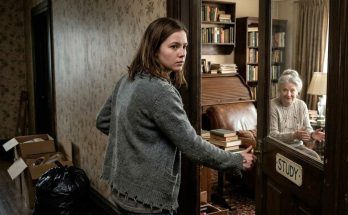
And then I was to go to his study.
I asked what I would find there.
He squeezed my fingers.
He said I would understand when the time came.
I wanted to press him for more information.
I wanted to ask whether he was worried about the house, about his belongings, or about me.
But his eyes had already begun to close.
So I promised.
Three days later, I lost him.
And the next morning, I learned why he had made me promise.
Click here to continue reading: PART 2: The People Who Had Missed Seventeen Years of My Life Arrived Before Breakfast and Started Deciding Where Everything Belonged
I Was Still Standing in the House That Raised Me When My Family Returned to Claim Everything I Had Left
Part 1 of 4