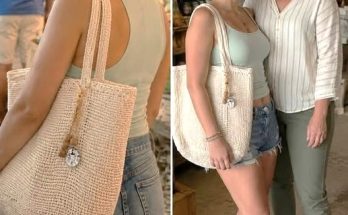
The following morning, I took the old envelope of photographs out again.
I spread them across the table, leaving the recent photograph on my phone.
I wanted to look at the years I remembered without forcing them to explain the years I didn't.
There was my daughter at six, her hair uneven because she had cut a section herself.
There she was at nine, standing beside a birthday cake with frosting on her chin.
At twelve, she had begun turning away from the camera.
At fifteen, she looked impatient whenever I asked her to smile.
The changes were ordinary.
That was what hurt.
I had lost the chance to see those ordinary changes happen. I had missed the moments that nobody thinks to record because they assume there will be more.
I couldn't recover them by studying the photographs.
I couldn't make the recent picture into a bridge that carried me straight across sixteen years.
I put the photographs away and made breakfast.
I ate at the table instead of standing at the counter.
Afterward, I washed my plate and dried it before putting it in the cupboard.
The small routine steadied me.
For years, I had thought that if my daughter returned, everything would have to happen at once. I imagined a knock, an embrace, an explanation, and a kind of forgiveness that would make the missing years fall into place.
Now I knew I couldn't expect any of that.
I might not get an explanation.
I might not get an embrace.
I might not even get a conversation.
If I ever stood in front of her, she would have every right to decide what happened next.
I called the woman that afternoon.
She answered with a quiet greeting.
"I've been thinking," I said.
"About what?"
"About what I would do if I had the chance to speak to her."
The woman waited.
"I used to think I would ask her why she left. I thought I needed to understand everything before I could stop hurting."
"And now?"
"Now I think I need to listen before I ask anything."
There was a small pause.
"That sounds like a good place to start."
I wasn't asking her to approve of me.
I was trying to say the idea aloud because it was easier to abandon an intention when it remained inside my head.
I asked if she had learned anything new.
She hadn't.
I felt the familiar disappointment, but it passed more quickly this time.
"Thank you for telling me," I said.
"I'll let you know if I have anything else."
We ended the call.
I returned to the table and looked at the page where I had written the dates.
I had begun to understand that waiting for information was not the same as doing nothing.
I could prepare myself to hear something difficult.
I could stop turning every unknown into the answer I feared most.
I could learn to leave room for my daughter's wishes, even if those wishes hurt me.
I couldn't prepare for every possibility.
But I could stop preparing only for the one I wanted.
I thought about the woman who had carried the bag on the boardwalk.
Before she showed me the photograph, I had seen her as a stranger holding something that belonged to my past. I had approached her with the certainty that the bag was mine to claim because I had made it.
But the bag had been with my daughter after she left.
It had passed beyond my knowledge.
Whatever its history during those sixteen years, I couldn't assume that every part of it belonged to me simply because I recognized the stitches.
I had made the bag.
My daughter had carried it.
That did not mean I owned the life that came afterward.
I wrote those two sentences on a separate sheet of paper.
Then I stared at them for a long time.
They seemed obvious.
They also seemed like something I had spent years refusing to understand.
In the evening, I took the folded letter from the drawer and put it in the envelope with the old photographs.
I didn't seal the envelope.
I wasn't ready to send the letter, and I didn't know if I would ever have an address where it could reach her.
But I wanted it kept with the memories, not hidden under the kitchen table among bills and receipts.
I placed the envelope on the shelf.
The house felt different, though nothing important had moved.
I had spent so long preserving the place my daughter left that I had barely noticed how much of my life had become a waiting room.
Every room had a memory attached to it.
Every memory seemed to end at the front door.
I could remember the way the light fell across the hallway that afternoon. I could remember the sound of the door opening. I could remember how quickly I had convinced myself that she would return once she had calmed down.
I had been wrong.
That was the part I could no longer soften.
I had told myself that I was teaching her a lesson. I had thought she would come back when she understood how serious I was.
I had not understood how much a seventeen-year-old might hear in those words.
I had not understood that a child could take a parent's anger as proof that she was unwanted.
I couldn't say that this was the only reason she disappeared.
I didn't know what had happened after she left, and I wouldn't pretend that I did.
But I could own the part that belonged to me.
I had made the doorway feel like an exit instead of a place where she could turn around.
That evening, I stood in the hallway and looked at the front door.
I didn't open it.
I didn't imagine her standing outside.
I simply stood there, remembering the girl who had walked through it and acknowledging that she had become a woman somewhere beyond my reach.
I wanted to find her.
I wanted to tell her I was sorry.
I wanted to know that she was safe.
Those wants were real, but they were mine.
They didn't create an obligation for her.
I went back to the kitchen and turned off the light.
For the first time, I understood that loving my daughter now meant preparing to accept an answer I might not like.
It meant accepting that she might not be ready to speak.
It meant accepting that the woman in the photograph might look at me and see only the person who had told her to go.
I couldn't demand that she remember the good years first.
I couldn't ask her to carry my regret for me.
All I could do was be honest about what I had done, and be ready to listen if she ever chose to tell me what she remembered.
I went to bed without checking my phone again.
The photograph would still be there in the morning.
So would the questions.
But I didn't have to answer them all in one night.
Click here to continue reading: PART 12: The Photograph Gave Me Hope, but I Had to Learn the Difference Between Finding My Daughter and Being Welcomed Back Into Her Life
The Last Thing I Said to My Seventeen-Year-Old Daughter Was Something I Would Spend the Rest of My Life Wishing I Could Take Back
Part 11 of 12