The next morning, I went back to my parents’ house.
Not because I wanted a confrontation.
Not because I wanted to scream at them.
I needed answers.
If I walked in angry, Gloria and Walt could turn everything into a fight about me accusing them. They could make themselves the victims and avoid the one person who mattered.
Lizzy.
I started looking for records.
The first thing I checked was the money that was supposed to support her care. Since my brother Ian was away receiving treatment, there had been regular payments meant for Lizzy’s needs.
I expected to see groceries, school supplies, clothes and medical expenses.
Instead, I found something else.
Restaurant bills.
Online shopping.
Electronics.
Weekend trips.
Personal purchases that had nothing to do with caring for a six-year-old child.
I photographed everything.
Then I searched for school information.
The next call confirmed my worst fear.
Lizzy had missed most of the days she was supposed to attend school.
When I asked whether anyone had contacted the family, the answer was yes.
The school had reached out multiple times.
Nobody had fixed the problem.
Nobody had explained why.
This was no longer about one terrible night.
It was a pattern.
A child had been trying to disappear because the adults around her had made her believe being quiet was easier than asking for help.
That afternoon, my mother finally contacted me.
The first message was simple.
Where is Lizzy?
I stared at the screen.
Not:
Is she okay?
Not:
How badly is she hurt?
Just:
Where is Lizzy?
Then another message arrived.
You ruined everything.
I looked at the evidence spread across the table.
The financial records.
The school reports.
The dates.
The missing care.
I had spent my whole life believing my parents were people who protected children.
Now I was looking at proof that they might have been protecting themselves.
Then I noticed something unusual.
One withdrawal from the account stood out.
The date matched the exact night Lizzy called me from the closet.
I zoomed in on the document.
There were two signatures.
I stared at the names attached to the transaction.
Because for years, Gloria and Walt had presented themselves as one voice.
One story.
One explanation.
But that piece of paper suggested something else.
Maybe they had not been hiding the truth together.
Maybe one of them had been trying to hide what the other had done.
Part 3 – My Father Finally Admitted He Had Seen the Warning Signs
I returned to the hospital with a folder full of evidence and a feeling that became harder to ignore with every passing hour. What happened to Lizzy was no longer just about one locked closet or one terrible night; it was about every moment when adults noticed something was wrong and decided not to ask more questions.
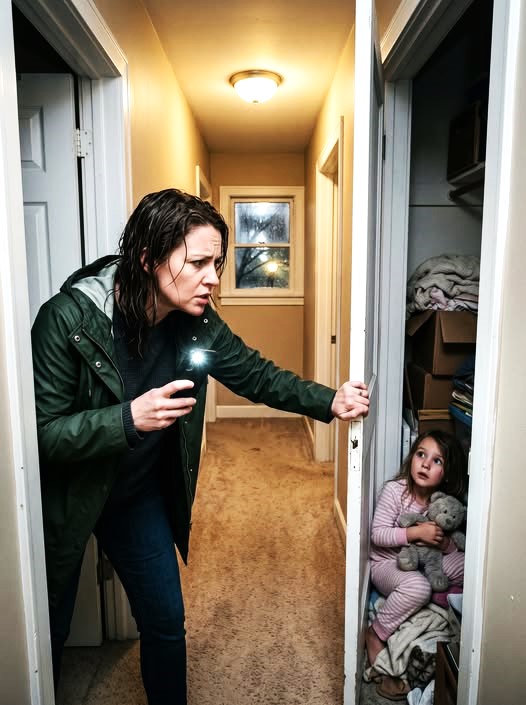
Lizzy was awake when I entered the room. She was sitting against the pillows with her stuffed bear tucked under one arm, slowly drinking water while watching the hallway outside.
The moment she saw me, her expression changed.
“Are they coming?”
I sat beside her and held her hand.
“Who?”
“Grandma and Grandpa.”
I could hear the fear behind the question. She was not asking because she missed them; she was asking because she was afraid they would take her back.
“No one is taking you anywhere tonight.”
She looked down at her blanket.
“Grandma will be angry because I told you.”
Those words hurt more than anything else she had said.
A six-year-old child believed asking for help was something she could be punished for.
I moved closer and tried to keep my voice calm.
“Lizzy, you did the right thing. You were scared, and you called someone who loves you.”
She hugged her bear tighter.
“But Grandma said families don’t tell people bad things.”
I looked at her for a moment.
“Families are supposed to protect each other. Telling the truth when you need help is not wrong.”
For the first time since I found her, her shoulders relaxed slightly.
Later that evening, my phone rang.
It was my father.
I almost let it go unanswered.
For years, Walt had always stood beside Gloria. Whenever my mother made a decision that upset someone, he was usually the person who explained it, defended her or asked everyone else to be patient.
But this time, his voice sounded different.
“Your mother is looking for the guardianship documents.”
I sat up.
“Why?”
“She thinks she can prove she was taking care of Lizzy.”
I looked toward my niece’s hospital bed.
“Dad, what aren’t you telling me?”
There was a long silence.
Then he finally admitted something I had not expected.
“I knew things weren’t right.”
My chest tightened.
“How long?”
“Months.”
He explained that he had noticed Lizzy becoming quieter. She stopped asking for things, stopped getting excited when they came home and often stayed alone in her room.
He had seen that she was eating less and becoming afraid to speak.
“Then why didn’t you tell me?”
His answer was almost a whisper.
“Because your mother kept saying Lizzy was difficult.”
I closed my eyes.
That word again.
Difficult.
It was the same word they had used every time someone noticed Lizzy needed more care.
My father admitted he had also seen money from Lizzy’s care account being used for things unrelated to her. At first, he convinced himself they were small mistakes, but eventually he realized there was a pattern.
“Did you sign those withdrawals?”
He did not answer immediately.
That silence told me enough.
“Dad.”
“I thought I could fix it.”
I looked at the documents on the table beside me.
The receipts.
The withdrawals.
The records showing Lizzy had missed school.
“You didn’t fix it.”
“I know.”
His voice broke.
“I was afraid of what would happen if I went against her.”
I understood then.
My father had not been unaware.
He had been afraid.
But fear did not change what happened to Lizzy.
While adults worried about arguments and consequences, a little girl had been sitting behind a locked door waiting for someone to believe her.
After we ended the call, I looked again at the withdrawal record I had photographed.


One Comment on “At midnight, my six-year-old niece called me, her voice trembling. “Aunt Natalie, please help me. They … me, and I’m so hung:ry and sca:red.” Her guardians—my own parents—had been spending her benefit checks on themselves while confining her in a dark closet. I didn’t waste time confronting them. I took action, and by the following day, every lie they had told began to unravel.”